
Integral Ecology Immersion in Saint Lucia, South Africa
09/04/2026
10th – 18th February 2026
St. Lucia in South Africa opened our hearts to a deep understanding of living an integral ecology. This place provided the conditions for a transformative ecological conversion journey. Deep immersion with creation allowed us to embody our interconnectedness with our Creator, our neighbors, and creation at St Lucia.
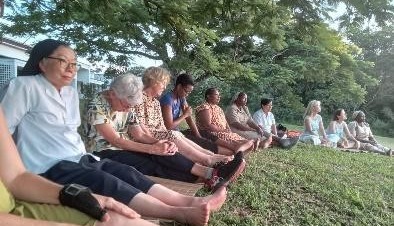
To begin putting our roots down, we started our first day with a sunset circle ritual on the banks of the estuary behind the St. Lucia retreat centre. Our eyes rested gently on the estuary ecosystem that stretched to the horizon, welcoming the darkness with serenity.
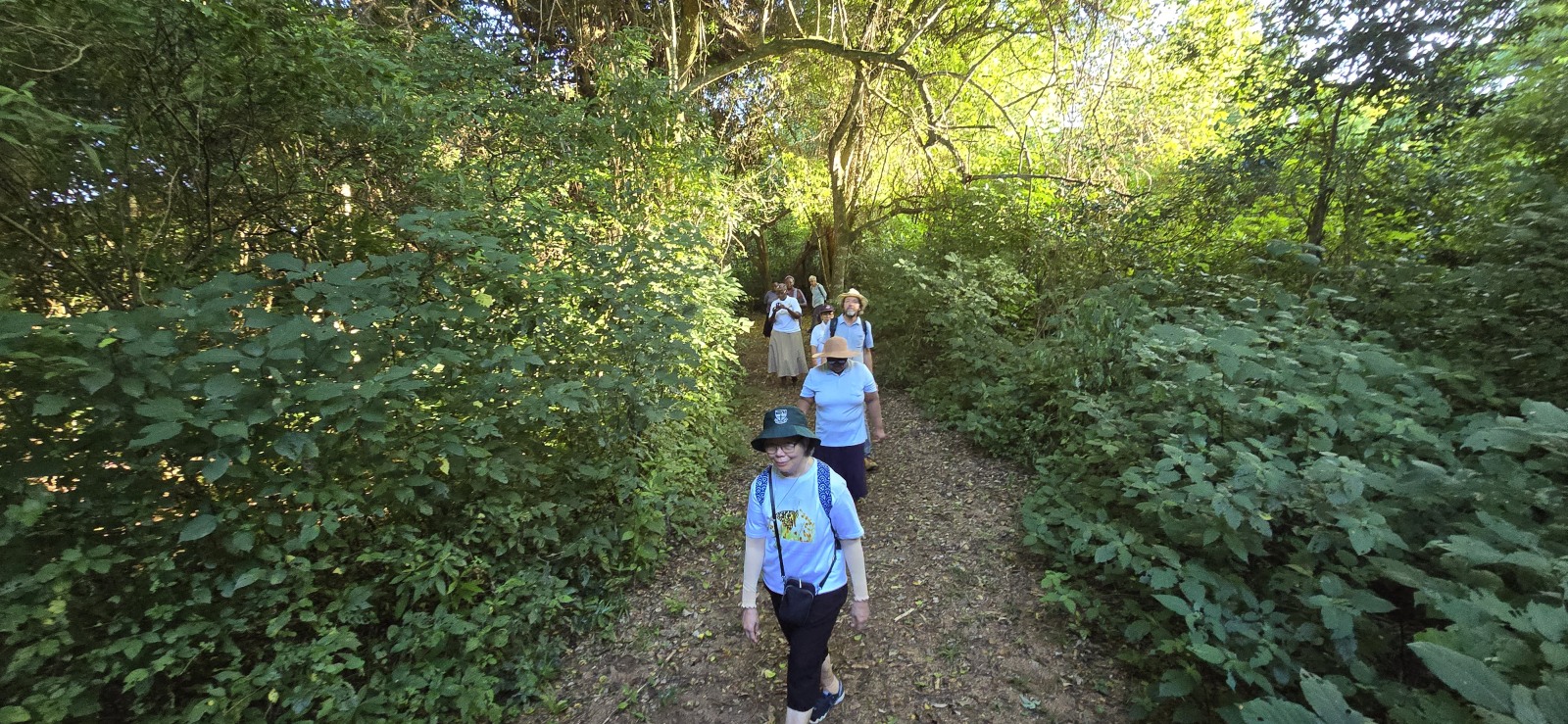
The following day at dawn, we went in silence for a walk in the forest. Each person had a unique experience of what nature generously offered: the breath of fresh air, birds singing melodiously, insects busy as usual, roots and vines tangled and intertwined, trees majestic as ever, leaves dancing to the tune the wind orchestrated, small animals waking up to hunt, and hippo dung reminding us of their nocturnal presence on land. We concluded our walk home in paired dialogue reflecting on our experience of being in communion with the forest. Later on the same day, we met many hippopotamuses who were gathered in pods, more than 800 submerged in the shallow estuary, as we floated above the surface in a boat.
‘God is here’ was manifested in all that we were experiencing.
 |
 |
 |
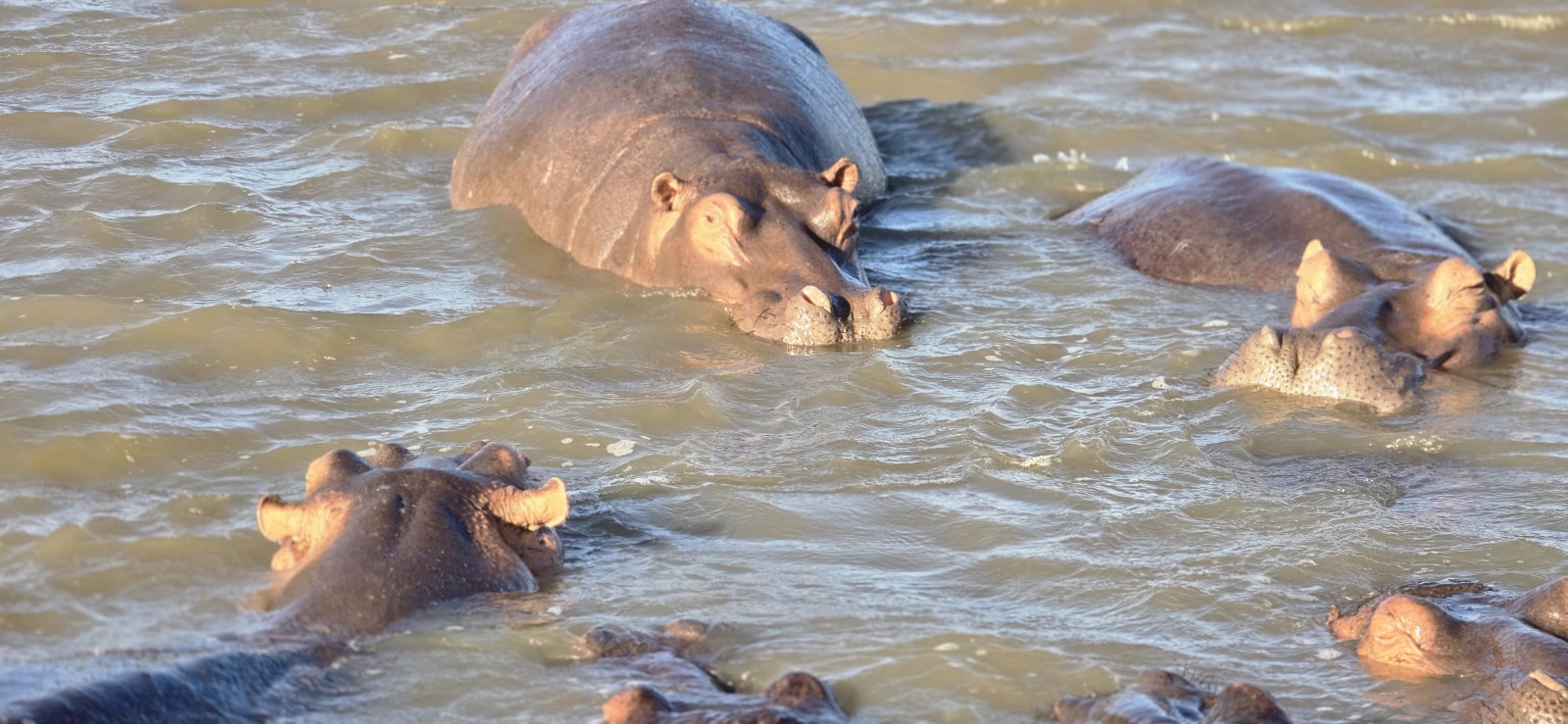
The boat ride down the estuary introduced us to several families of hippos, whose eyes watched us closely, and who would sound the alarm when we neared their territory.
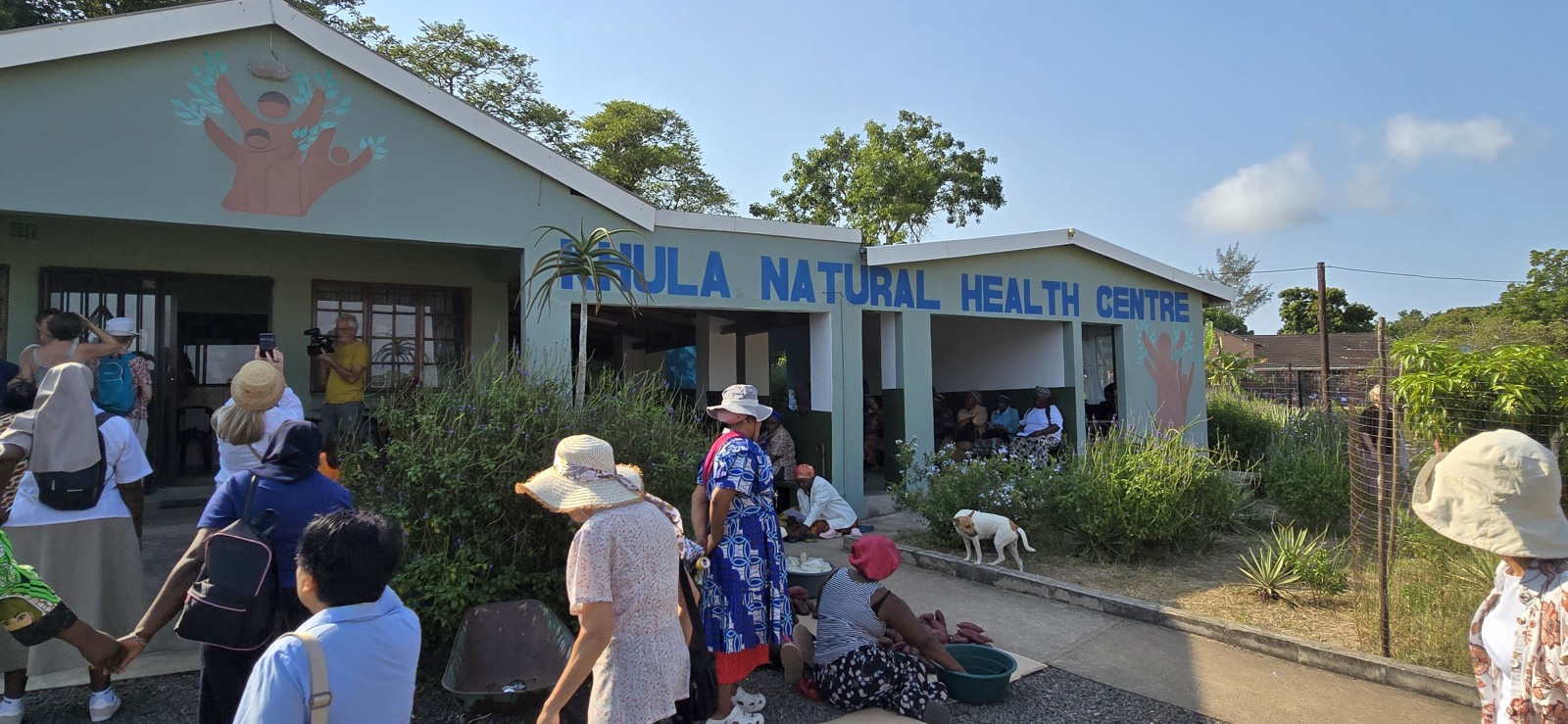
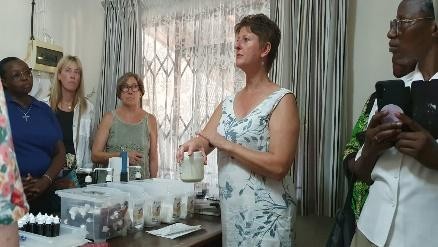
The visit to the Natural Health Clinic in Khula village, run by a couple who are homeopathic medical doctors, demonstrated the power of locally grown herbal medicine. Patients pay a small fee of 10 Rand for holistic counselling services, including medication offered (the fee is waived if unaffordable). The patients, who came from far and wide, sang the morning prayer with gusto that spoke of their grateful hearts. They prayed they would receive healing of mind and body.
We visited a home-based educational project initiated by the Ursuline sisters through Sr Elisabeth Marie some time back. The classroom, which has just been added, is attached to a family house owned by an elder, where homework, remedial classes and life skills courses are carried out by a small team of local women - two teachers and a social worker. The testimony was that the children improved academically in their respective schools.
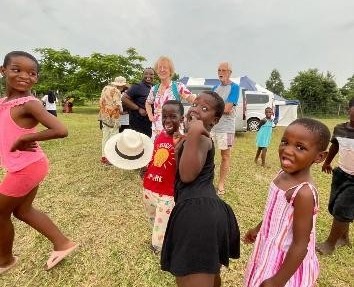
What a joy it was to sing and interact with these children, whose eyes shone radiantly with playful presence and hope of a brighter future. The children came from a variety of families, where literacy is very poor if not non-existent, and many parents are away for work, with grannies looking after the children. This holding environment greatly boosted their self-esteem.
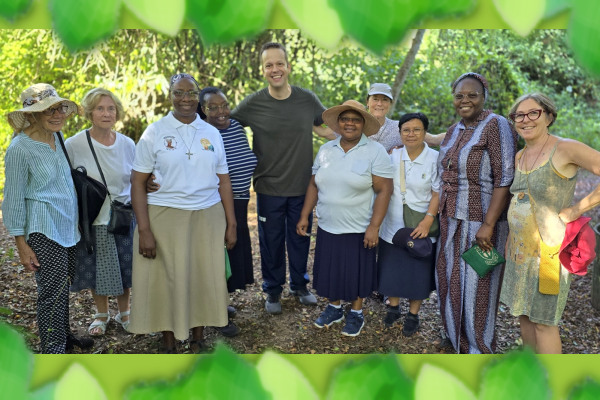
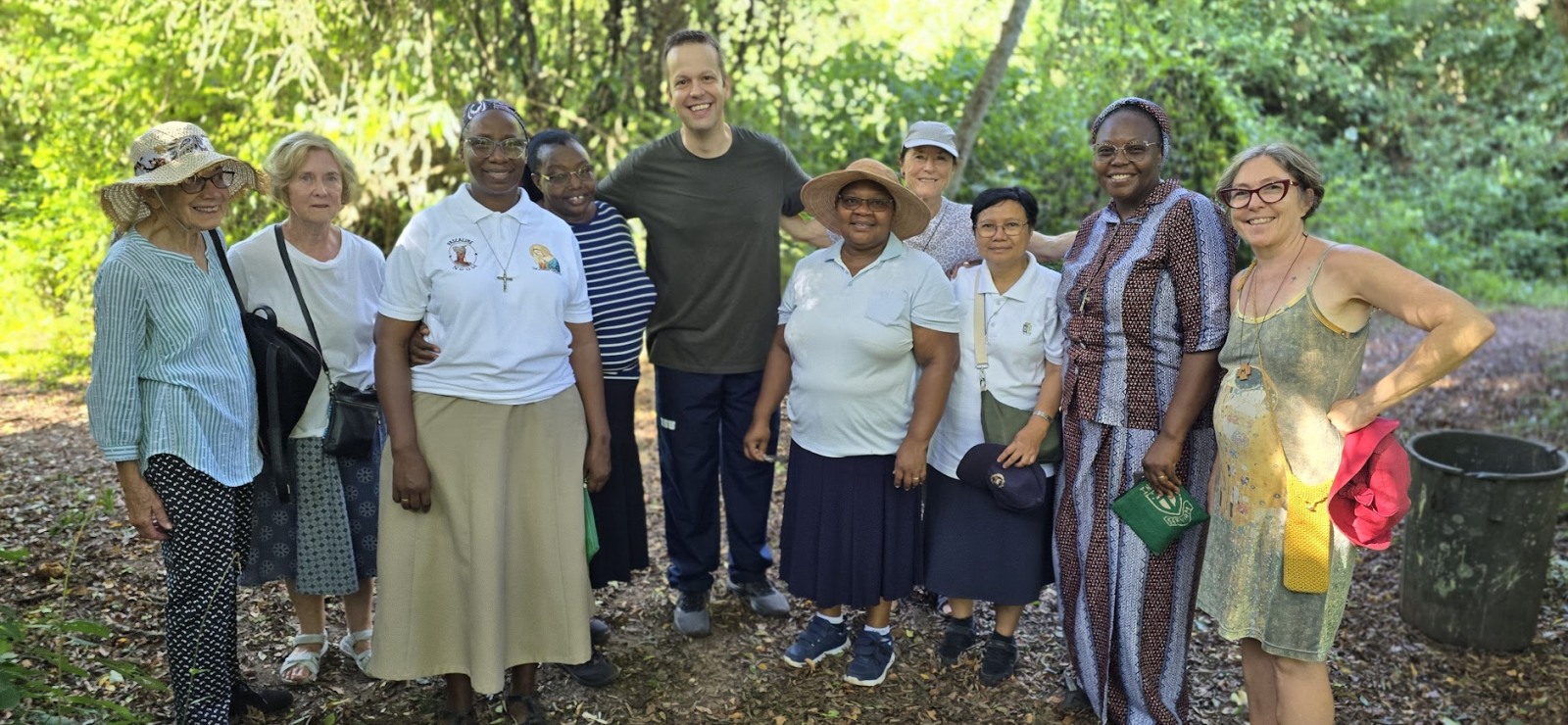
The visit on the third day to the clinic and the education center gave us an experience of integral ecology in practice. A real taste of cultural richness in living relationship with ecological realities where local people face and live with dignity amid their scarce economic context.
 |
 |
 |
Another experience that was grounding was the labyrinth walk around a strong, deeply rooted Flamboyant tree whose massive trunk stood firmly at the centre, and whose wide-spreading branches stretched outward in a canopy style, providing enough shade for all of us. The design of the labyrinth is made to draw us to the centre of our being and the universe. The rhythm from the outer realm to the inner realm, and from macro to micro, holds us in a balance that embraces all in God the Creator. It was an experience that was personal, yet collectively encountered in the labyrinth design.
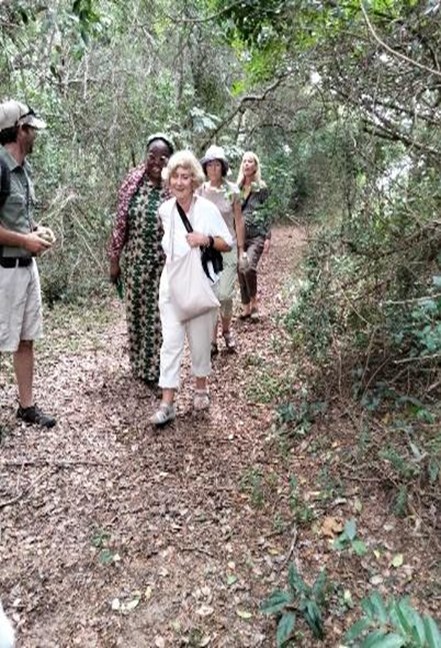
Visiting Cape Vidal and iSimangaliso Wetland Park was an ecstatic experience. A walk on the outskirts of the Park led by Ashley Wormald, a conservation guide in St Lucia, highlighted the natural wonder of the biodiversity unique to the area. He also painted a clear picture of the interaction of the ecosystems between humans and nature, and how the area recovered its natural beauty after human industry (forestry) withdrew.
 |
 |
 |
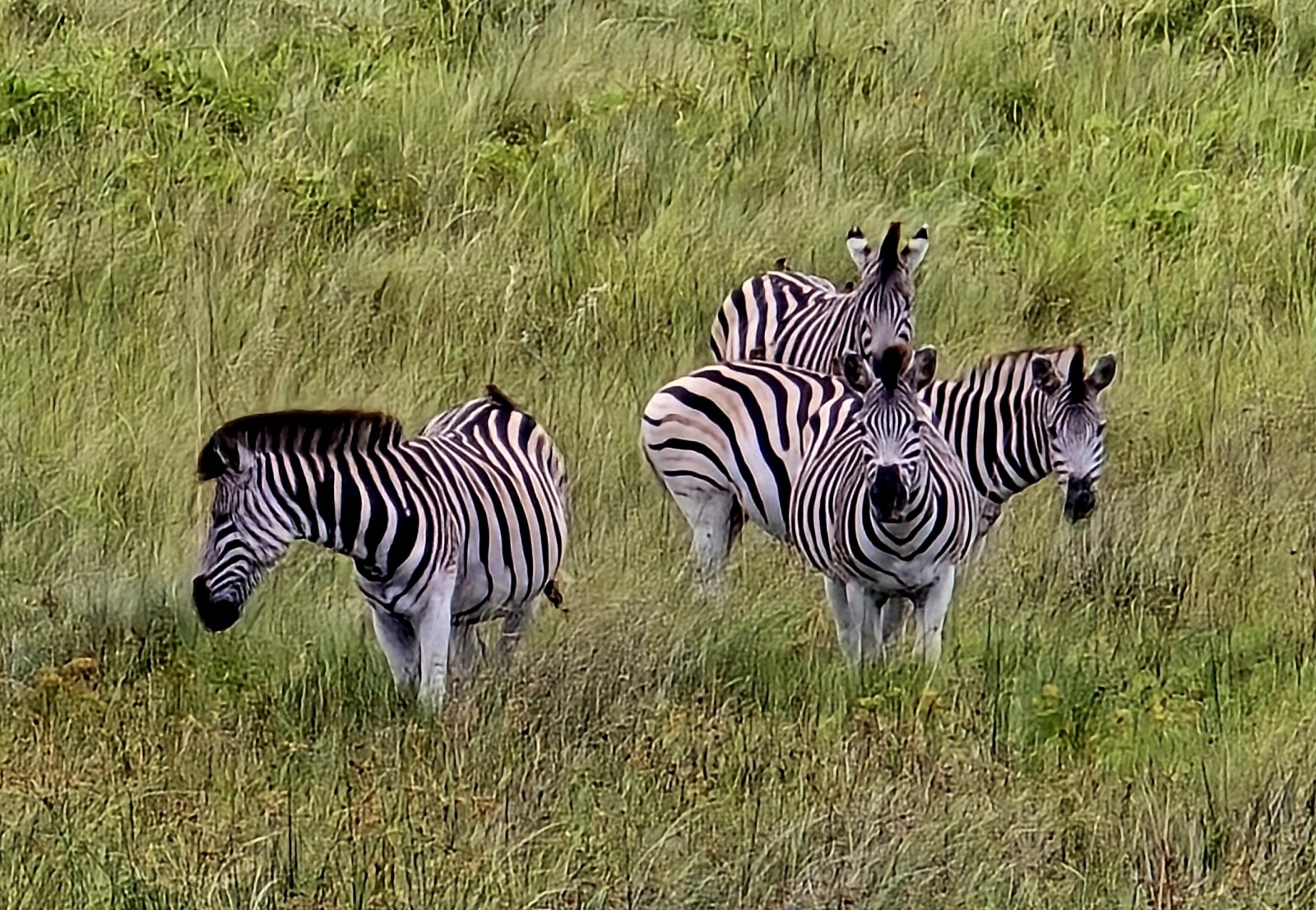
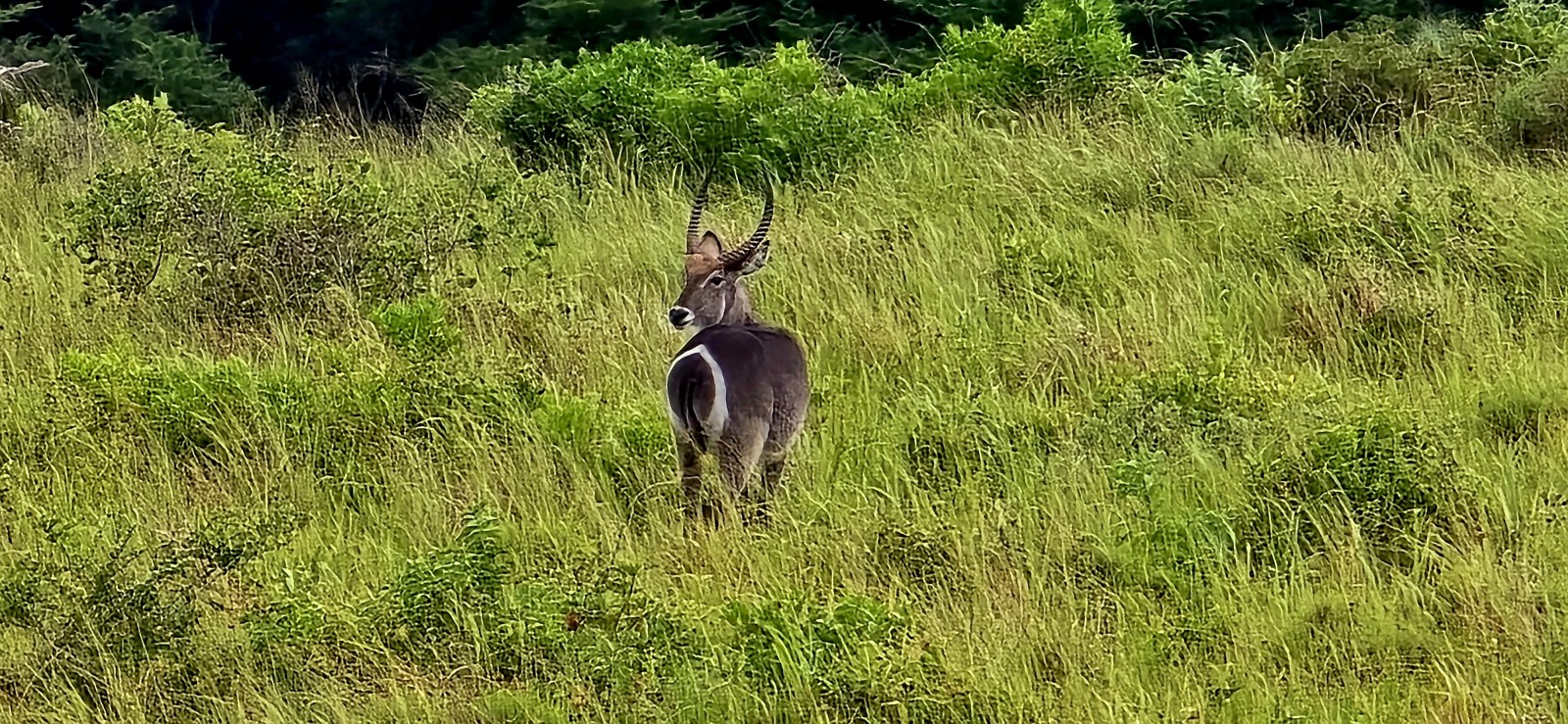
The Park itself is a wonderland rich in wild animals. Zebras, antelopes, warthogs, buffaloes, and rhinos dotted the landscape with a beauty second to none. Many types of birds paraded their multi-coloured feathers with a sense of pride that left us humbled by nature’s elegance.
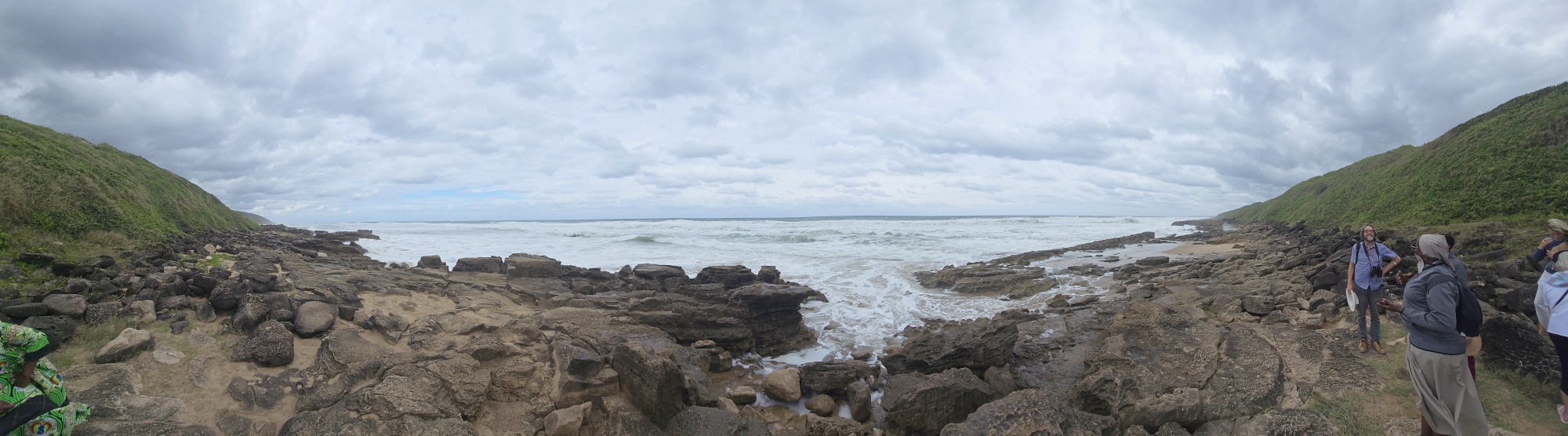
Mission Rocks, not far from Cape Vidal beach, had rolling, high ocean waves that sprayed us with water even from a distance. The sounds of the waves reminded us of the power of God, but also of the wrath of nature that can roll and swallow without a blink. Swimming in these waters would be a risk.
All of these experiences gave us ‘Aha’ moments.
We were given an opportunity to meet two young men from the local community in Khula Village. Nde and Fanele shared stories with us about their reality including their current struggles. The struggles of unemployment, finding their contribution in light of complex realities and a lack of educational opportunities. But they also had joys in their cultural heritage, for instance, in music and art. They were proud of their country and history.
We were also blessed to listen to four young women, all of whom grew up in rural KwaZulu-Natal. Nonto and her family are a vital part of the Catholic outstation and as well as her degree in Community Development, Nonto is fully trained in Ignatian Spirituality, and works at the Retreat Centre. She is also a vital link in community projects. Veronica and Pinky are qualified teachers and run the afternoon programmes with supervision from Pam. Vuyo is close to completing her social work qualifications and helps with both homework and social support. They shared both their struggles and accomplishments, not managing to gain access into the system due to corruption, but finding grace through ongoing training and the project at Gogo Thandi; feeling despair at the brokenness of education and so many desperate young people around them in Dukuduku and Khula Village, yet determined to start somewhere and make a difference with love and passion.
We also visited Mtubatuba, a vibrant and somewhat chaotic town where locals shop and trade. The streets bustled with trolleys and wheelbarrows, and many pedestrians; the hawkers sold everything from medicinal herbs and roots to plastic keyrings made in China…. anything to eke out a living. Down the road the sugar mill was being serviced, ready to start pumping out its loads of sugar - the primary industry in this area.
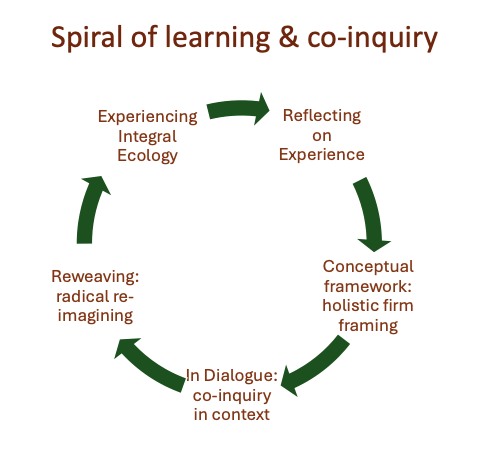 All of the experiences briefly described above were stimulus for co-inquiry into Integral Ecology. The spiral process below shows the cycle that was followed. Our two convenors, Jacqui Remond and Megan Seneque, co-designed an Integral Ecology pedagogy and the spiral of learning and co-inquiry, drawing on Heron’s (1999) Cooperative Inquiry process. Theory U and the iceberg concept reminded us of the inner journey that needed to be undertaken so that transformation could take place when the invisible insights became visible through deep listening and dialogue. This process of ecological conversion enabled participants to recognise that we are all kin and an integral part of the ecosystem.
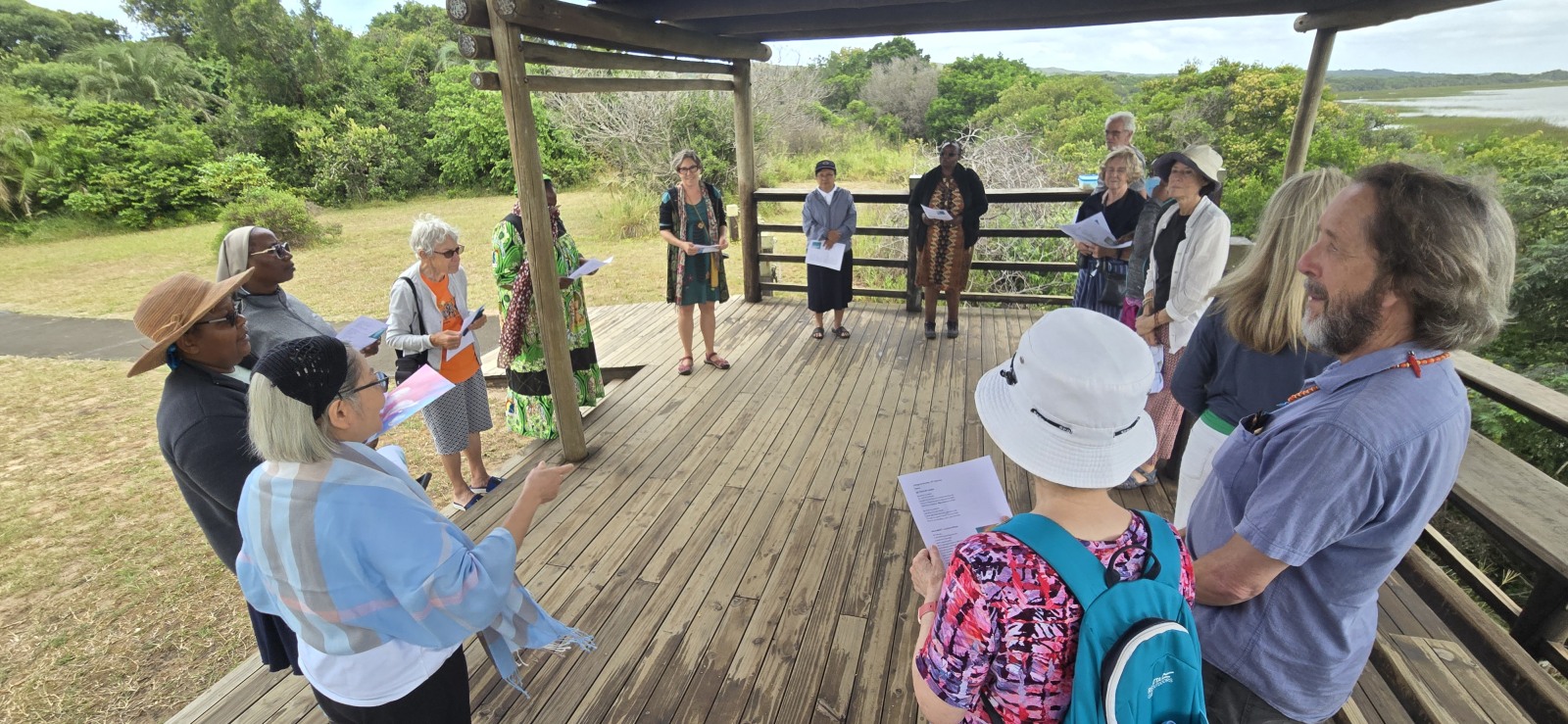
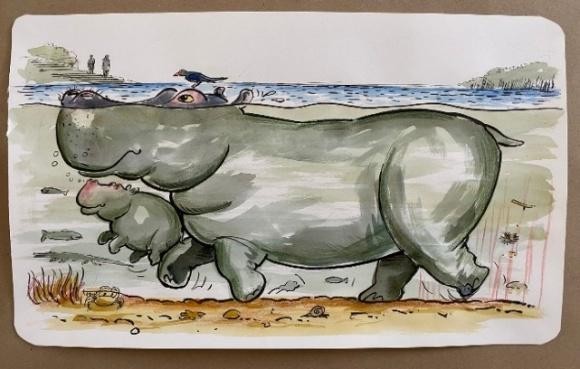
The visual scribe, Alastair, captured the journey in art and helped to contextualize the metaphor of the hippo from the iceberg. A sister from Botswana shared after the program, “Our first glimpse/understanding/knowledge is just the eyes, the nose - there is a lot more to the hippo.”
The St Lucia retreat centre staff, represented by Pam and Rob, went out of their way to make sure that the experience was holistic by making the centre very conducive and welcoming for us.
Sr Agatha Linda, the General Councilor, coordinated the practical dimensions of the travel logistics and communications for the core group and the participants from Africa to attend the face-to-face meeting. We are deeply grateful for the effort and dedication she put into making this meaningful experience possible...
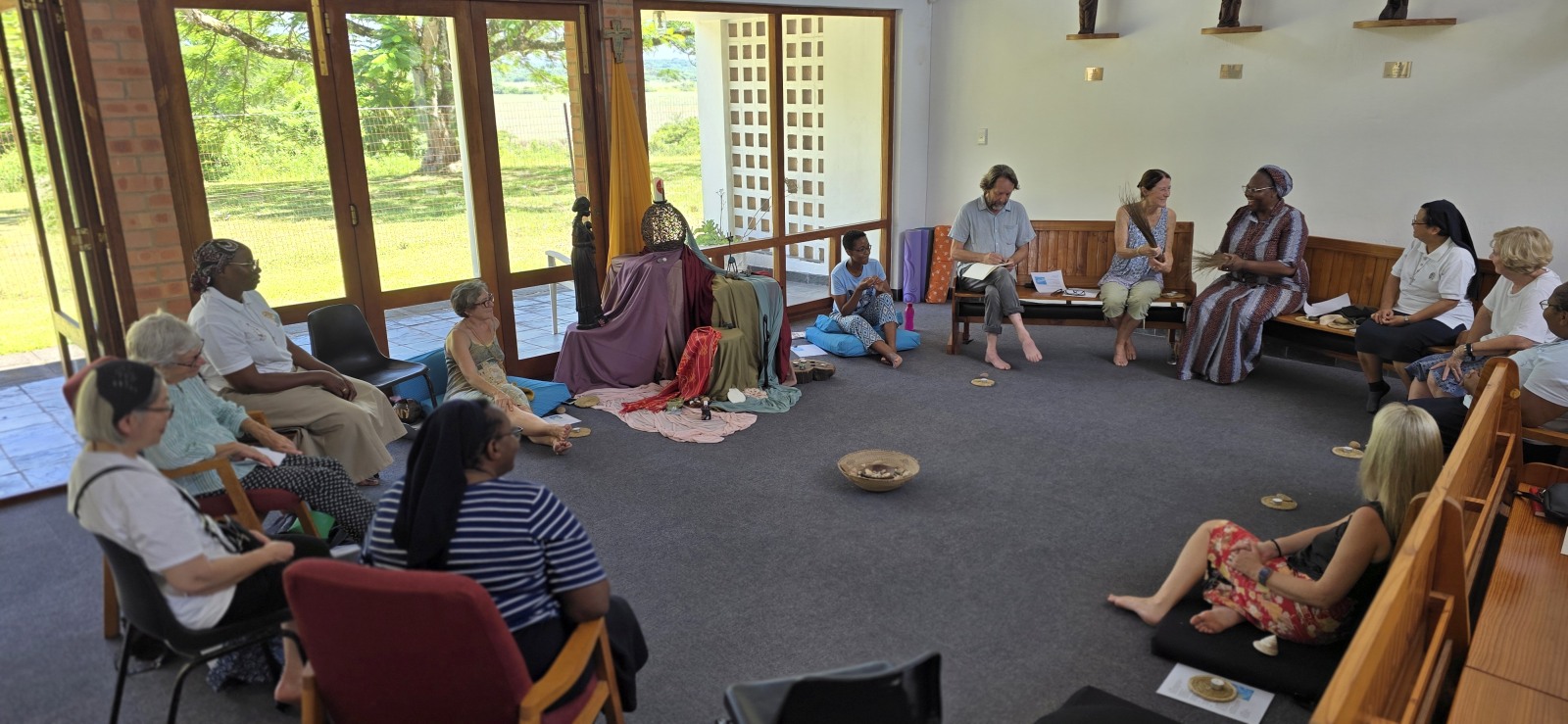
At the closing ritual, we gathered and reflected on our immersion experience in St. Lucia, and each participant expressed in a creative way where they found themselves. We shared what had enriched, nourished, and inspired us. We feel strongly that growing our integral ecological pedagogies is critical in shaping the future of life on Earth.
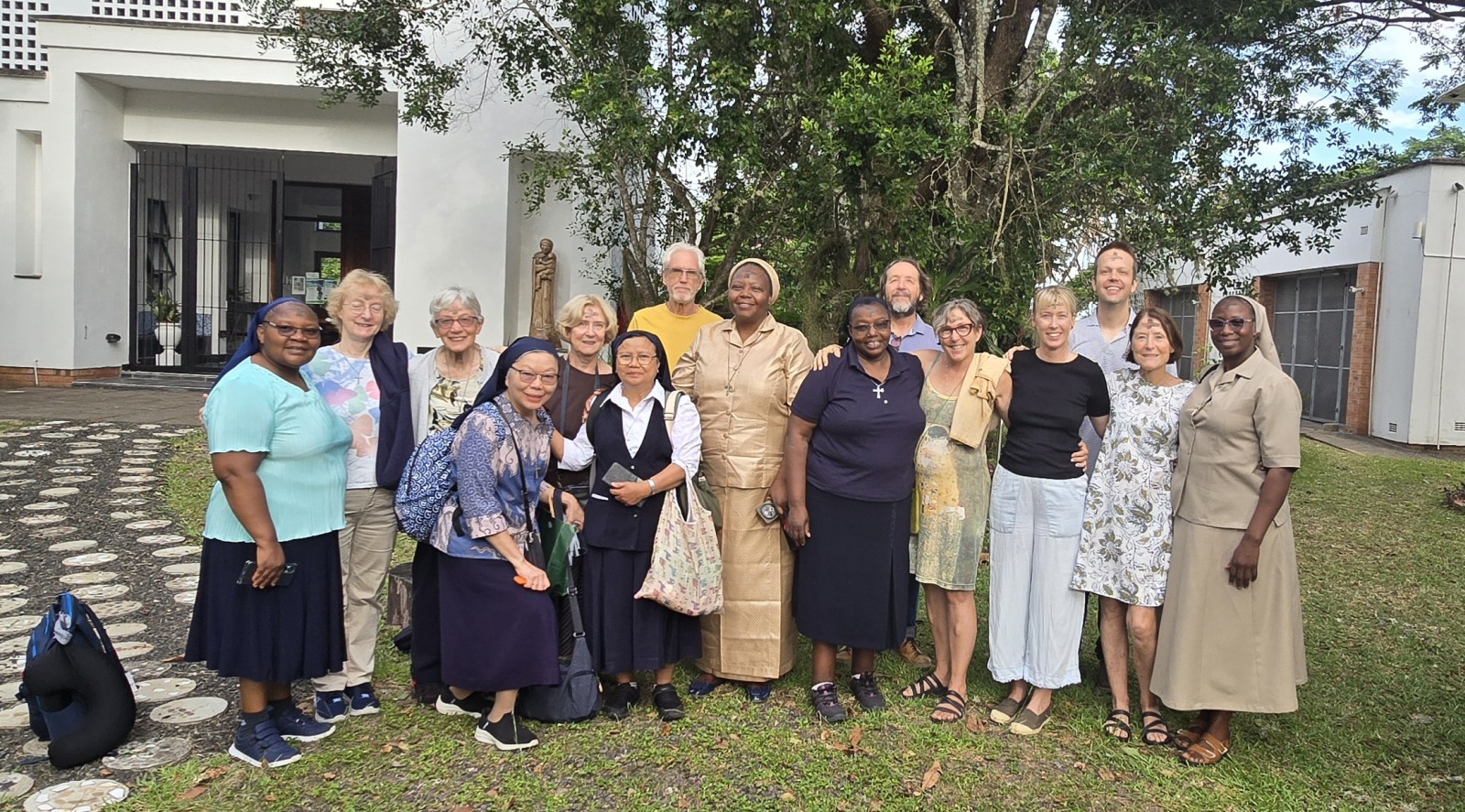
You can see more photos at this link ►
Integral Ecology Core Group:
Anastasia Ratnawati osu, Mairead O’Regan osu, Teresia Muhuhu osu, Pam Paton-Mills,
Agatha Linda Chandra osu, Rafael Bianchi, Jacqui Remond, Megan Seneque.